
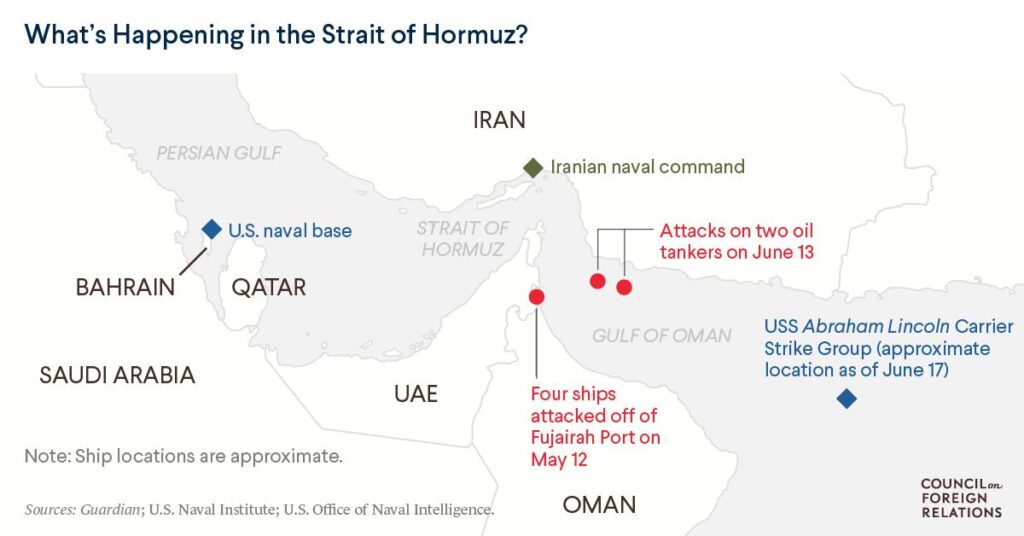
The Strait of Hormuz has once again become the center of global attention after the United States announced a naval blockade targeting Iran following failed diplomatic talks. A closer look at the map reveals why this narrow waterway is one of the most strategically important locations in the world.
Located between Iran and Oman, the Strait of Hormuz connects the Persian Gulf to the Arabian Sea. At its narrowest point, it is just about 33 km wide, yet it handles a massive share of global oil transport. In fact, nearly 20% of the world’s oil supply passes through this route, making it a critical chokepoint for global energy markets.
Where the Blockade Is Happening
According to reports, the US Navy’s blockade is focused mainly on Iranian ports and nearby waters, rather than completely shutting down the entire strait. This means ships linked to Iran could be stopped, inspected, or denied passage, while other international vessels may still move through under monitoring.
The map highlights key areas like:
- Iranian coastal ports (Bushehr, Bandar Abbas)
- Shipping lanes used by oil tankers
- Strategic naval deployment zones in the Gulf
US Navy Strategy
The US has reportedly deployed multiple warships and is conducting operations such as mine-clearing and vessel tracking to secure the region.
This targeted blockade aims to restrict Iran’s oil exports while maintaining limited global shipping flow
Why This Matters
- Affects global oil prices and supply
- Impacts countries dependent on Middle Eastern oil
- Raises risk of military escalation
The Strait of Hormuz map clearly shows why this region is so critical. Even a partial blockade can disrupt global trade and trigger economic ripple effects worldwide. As tensions rise, the world is closely watching how this geopolitical crisis unfolds.